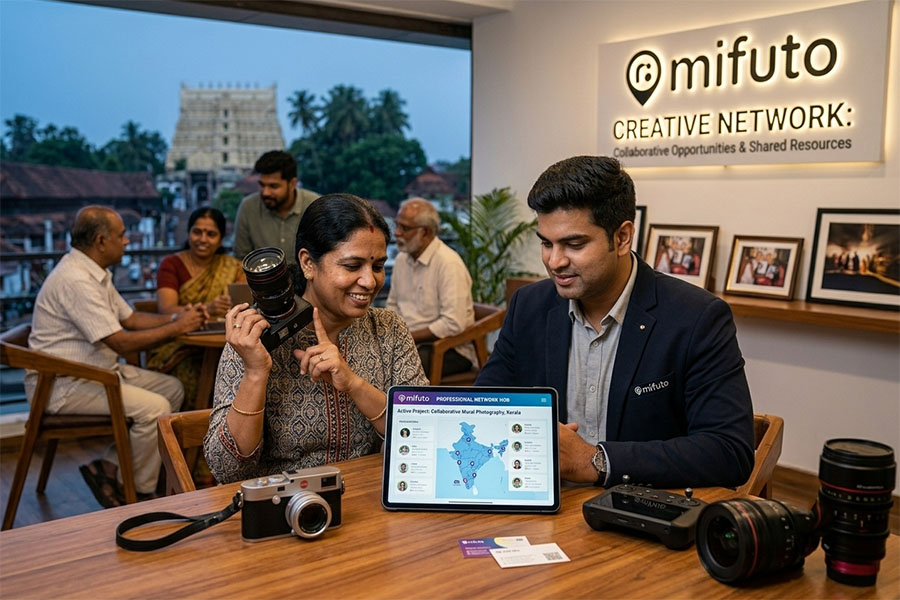
Why Photographers Are Moving from Freelancing to Professional Networks
For many years, photography has been a highly individual profession. Photographers found clients through personal contacts, Instagram, WhatsApp, referrals and social media.
But the industry is gradually moving toward a more connected model: professional photography networks.
Today, photography networks can offer photographers more than just a place to showcase their work. They can provide access to assignments, collaborations, professional profiles, verification and business opportunities. For example, Photographers Network India highlights job opportunities, networking and portfolio visibility as benefits of joining a professional network.
From Finding Clients to Finding Opportunities
A freelancer often has to continuously search for the next assignment.
A professional network can change that equation.
Instead of depending entirely on personal enquiries, photographers can create a profile, list their skills and experience, and become discoverable for relevant projects.
Platforms such as FliqaIndia and Lensroom are examples of this emerging model, connecting verified photographers with project or booking opportunities.
Example: A Wedding Photographer
Imagine a photographer who normally gets most of their work through Instagram and referrals.
During a slow month, enquiries may decrease.
By joining a professional network, the photographer can potentially access additional assignments, collaborations or second-shooter opportunities while continuing to take their own direct bookings.
Freelancing doesn't disappear. The network becomes another source of work.
Verification Is Becoming Important
Customers increasingly want to know:
- Who is the photographer?
- What equipment do they use?
- What are their skills?
- How much experience do they have?
- What type of photography do they specialise in?
Professional networks can bring this information together in one profile. Some Indian photography networks already use verification, portfolio information, specialisations and experience as part of their professional profiles.
Collaboration Is Another Advantage
Photography doesn't always have to be a one-person business.
Large weddings, corporate events and multi-location assignments may require multiple photographers, videographers or editors.
A professional network makes it easier to discover other professionals and build a team when the assignment demands it.
Professional photography organisations also emphasise networking, education, collaboration and industry development as important parts of a photographer's career.
Freelancing vs Professional Network
Traditional Freelancing
• Find clients yourself
• Manage every enquiry
• Depend heavily on referrals
• Build your own professional identity
• Search for work continuously
Professional Network
• Discover relevant opportunities
• Build a verified professional profile
• Connect with other photographers
• Find collaborations and assignments
• Build a stronger professional identity
The Future May Not Be Freelancing vs Networking
Photographers don't necessarily have to choose one over the other.
The future could be freelancing + professional networking.
A photographer can continue building their own brand while becoming part of a larger ecosystem that brings additional opportunities.
Your photography business may be independent.
Your professional network doesn't have to be.
And as photography becomes more digital and organised, being part of the right network could become just as important as having the right camera.