Select Now
Home Updates ONLY IN MIFUTO CREATORS
ONLY IN MIFUTO CREATORS
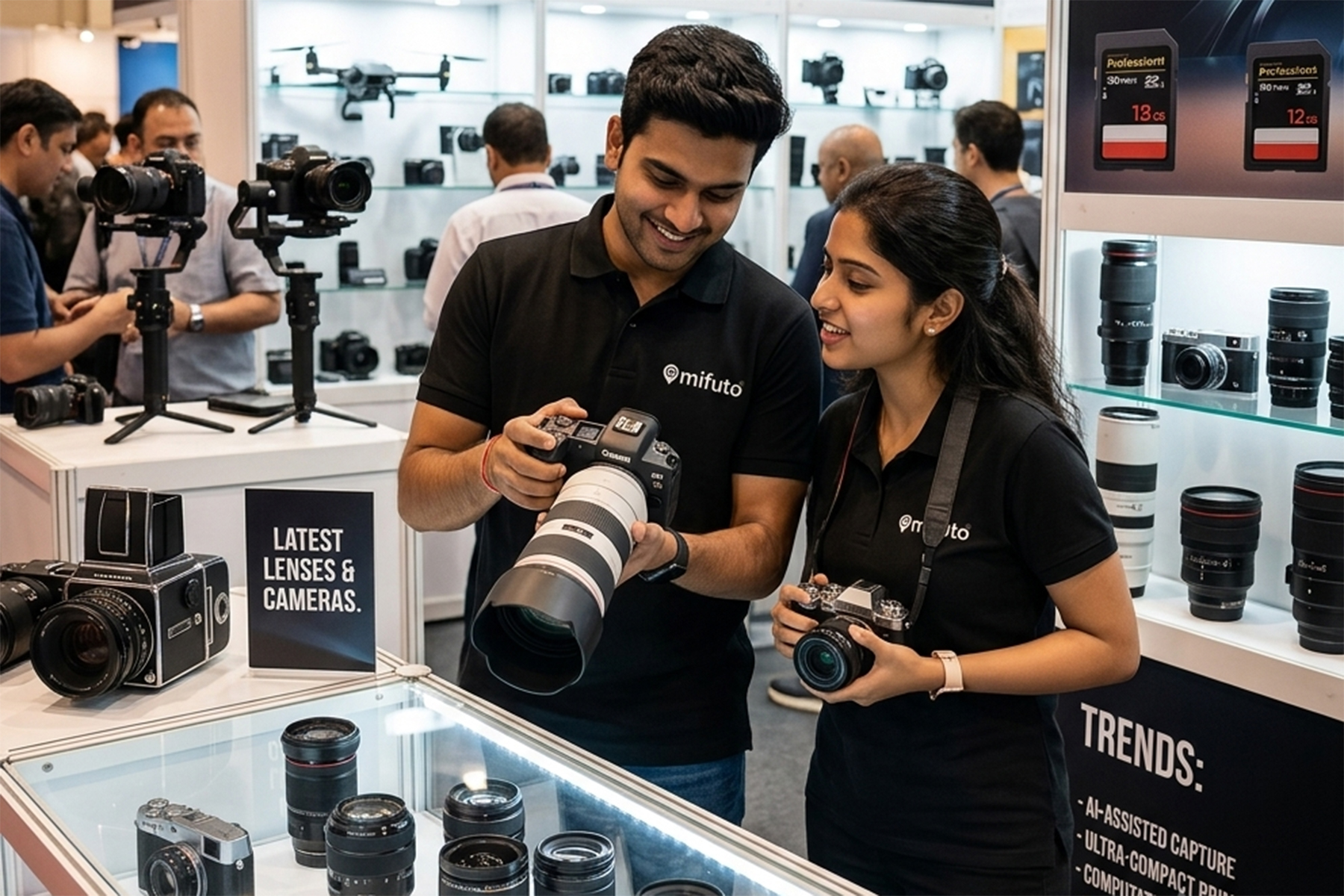
Top Camera & Lens Trends Photographers Should Know in 2026 Photography gear is changing quickly in 2026. For photographers, the biggest shift is not simply about higher megapixels—it is about smarter autofocus, compact designs, better lenses and more versatile camera systems. Here are some of the trends photographers should know this year. 1. Mirrorless Is Now the Mainstream Choice Mirrorless cameras continue to dominate the professional photography market. They offer advanced autofocus, strong video capabilities and rapidly expanding lens systems. Nikon estimates that mirrorless cameras now account for roughly nine out of ten new interchangeable-lens cameras shipped worldwide. Examples: Sony A7 V Canon EOS R6 Mark III Nikon Z8 / Z9 Fujifilm X-T5 / X-E5 For photographers starting a new system, mirrorless is increasingly the natural direction. 2. AI-Powered Autofocus Is Getting Smarter Modern cameras can recognise and track people, faces, eyes, animals and other subjects with impressive accuracy. For wedding and event photographers, this can be particularly useful when subjects are moving quickly or lighting conditions change. Example: A photographer shooting a wedding entrance can rely on subject tracking to maintain focus while the couple moves toward the camera. But autofocus is still not perfect. Lens choice, aperture, lighting and subject movement continue to affect the final result. 3. Compact Cameras Are Making a Comeback Bigger does not always mean better. There is growing interest in cameras that deliver strong image quality while being smaller and easier to carry. Fujifilm's compact models are a good example of this trend, while the X100 series continues to attract photographers looking for a portable everyday camera. Example: A compact camera can be much easier to carry during travel, street photography or long wedding assignments. 4. Fast Prime Lenses Are Still Popular Prime lenses remain a favourite for portraits, weddings and low-light photography. Popular focal lengths such as 35mm, 50mm and 85mm offer different perspectives while wide apertures such as f/1.4 or f/1.8 can create beautiful background separation. Examples: 35mm f/1.4 — environmental portraits & events 50mm f/1.8 — everyday photography 85mm f/1.4 — portraits & weddings 5. Professional Zoom Lenses Are Becoming More Versatile Photographers increasingly want one lens that can handle multiple situations. A 24-70mm f/2.8 can cover everything from group photographs to portraits, while a 70-200mm f/2.8 is useful for ceremonies, stage events and candid moments. Recent 2026 lens releases and reviews continue to highlight high-performance zooms alongside fast primes. 6. Third-Party Lenses Are Getting More Competitive Photographers are no longer limited to buying lenses from their camera manufacturer. Brands such as Sigma, Tamron and Viltrox are producing increasingly capable autofocus lenses for popular mirrorless mounts, giving photographers more choices across different budgets. Example: A photographer may choose a third-party 28-75mm or 35-150mm zoom instead of spending significantly more on a first-party lens. 7. Hybrid Photography + Video Is Becoming More Important Today's photographers are increasingly expected to create both photographs and short-form video. That means features such as 4K/6K video, reliable autofocus, image stabilisation and good battery performance are becoming important when choosing a camera. For event photographers especially, one camera can become a tool for both stills and social-media content. 8. The Lens Matters as Much as the Camera A new camera body may give you better autofocus or resolution, but the lens determines much of the look and versatility of your images. That's why photographers should think beyond: “Which camera should I buy?” and ask: “Which camera + lens combination suits the work I actually do?” A wedding photographer, wildlife photographer, portrait photographer and street photographer may all need completely different setups. The 2026 Takeaway You don't necessarily need the newest or most expensive camera. The smarter approach is to choose equipment based on your type of photography, working conditions, budget and long-term lens system. Because in professional photography, the best camera isn't always the most expensive one—it's the one that helps you deliver your best work consistently.

Top Camera & Lens Trends Photographers Should Know in 2026

Photography gear is changing quickly in 2026. For photographers, the biggest shift is not simply about higher megapixels—it is about smarter autofocus, compact designs, better lenses and more versatile camera systems.

Here are some of the trends photographers should know this year.

1. Mirrorless Is Now the Mainstream Choice

Mirrorless cameras continue to dominate the professional photography market. They offer advanced autofocus, strong video capabilities and rapidly expanding lens systems. Nikon estimates that mirrorless cameras now account for roughly nine out of ten new interchangeable-lens cameras shipped worldwide.

Examples:

  • Sony A7 V
  • Canon EOS R6 Mark III
  • Nikon Z8 / Z9
  • Fujifilm X-T5 / X-E5

For photographers starting a new system, mirrorless is increasingly the natural direction.

2. AI-Powered Autofocus Is Getting Smarter

Modern cameras can recognise and track people, faces, eyes, animals and other subjects with impressive accuracy.

For wedding and event photographers, this can be particularly useful when subjects are moving quickly or lighting conditions change.

Example: A photographer shooting a wedding entrance can rely on subject tracking to maintain focus while the couple moves toward the camera.

But autofocus is still not perfect. Lens choice, aperture, lighting and subject movement continue to affect the final result.

3. Compact Cameras Are Making a Comeback

Bigger does not always mean better.

There is growing interest in cameras that deliver strong image quality while being smaller and easier to carry. Fujifilm's compact models are a good example of this trend, while the X100 series continues to attract photographers looking for a portable everyday camera.

Example: A compact camera can be much easier to carry during travel, street photography or long wedding assignments.

4. Fast Prime Lenses Are Still Popular

Prime lenses remain a favourite for portraits, weddings and low-light photography.

Popular focal lengths such as 35mm, 50mm and 85mm offer different perspectives while wide apertures such as f/1.4 or f/1.8 can create beautiful background separation.

Examples:

  • 35mm f/1.4 — environmental portraits & events
  • 50mm f/1.8 — everyday photography
  • 85mm f/1.4 — portraits & weddings

5. Professional Zoom Lenses Are Becoming More Versatile

Photographers increasingly want one lens that can handle multiple situations.

A 24-70mm f/2.8 can cover everything from group photographs to portraits, while a 70-200mm f/2.8 is useful for ceremonies, stage events and candid moments.

Recent 2026 lens releases and reviews continue to highlight high-performance zooms alongside fast primes.

6. Third-Party Lenses Are Getting More Competitive

Photographers are no longer limited to buying lenses from their camera manufacturer.

Brands such as Sigma, Tamron and Viltrox are producing increasingly capable autofocus lenses for popular mirrorless mounts, giving photographers more choices across different budgets.

Example: A photographer may choose a third-party 28-75mm or 35-150mm zoom instead of spending significantly more on a first-party lens.

7. Hybrid Photography + Video Is Becoming More Important

Today's photographers are increasingly expected to create both photographs and short-form video.

That means features such as 4K/6K video, reliable autofocus, image stabilisation and good battery performance are becoming important when choosing a camera.

For event photographers especially, one camera can become a tool for both stills and social-media content.

8. The Lens Matters as Much as the Camera

A new camera body may give you better autofocus or resolution, but the lens determines much of the look and versatility of your images.

That's why photographers should think beyond:

“Which camera should I buy?”

and ask:

“Which camera + lens combination suits the work I actually do?”

A wedding photographer, wildlife photographer, portrait photographer and street photographer may all need completely different setups.

The 2026 Takeaway

You don't necessarily need the newest or most expensive camera.

The smarter approach is to choose equipment based on your type of photography, working conditions, budget and long-term lens system.

Because in professional photography, the best camera isn't always the most expensive one—it's the one that helps you deliver your best work consistently.

By Arunima J T Nair
Tags
Mirrorless Is Now the Mainstream Choice AI-Powered Autofocus Is Getting Smarter Compact Cameras Are Making a Comeback Fast Prime Lenses Are Still Popular
MIFUTO

Capture Your Best Moments

Professional photography services for events, weddings and corporate coverage.

Book Services Now