How Smartphone Cameras Are Changing Professional Photography
A few years ago, professional photography meant a DSLR or mirrorless camera, multiple lenses and a lot of equipment. Today, a powerful camera can fit inside your pocket.
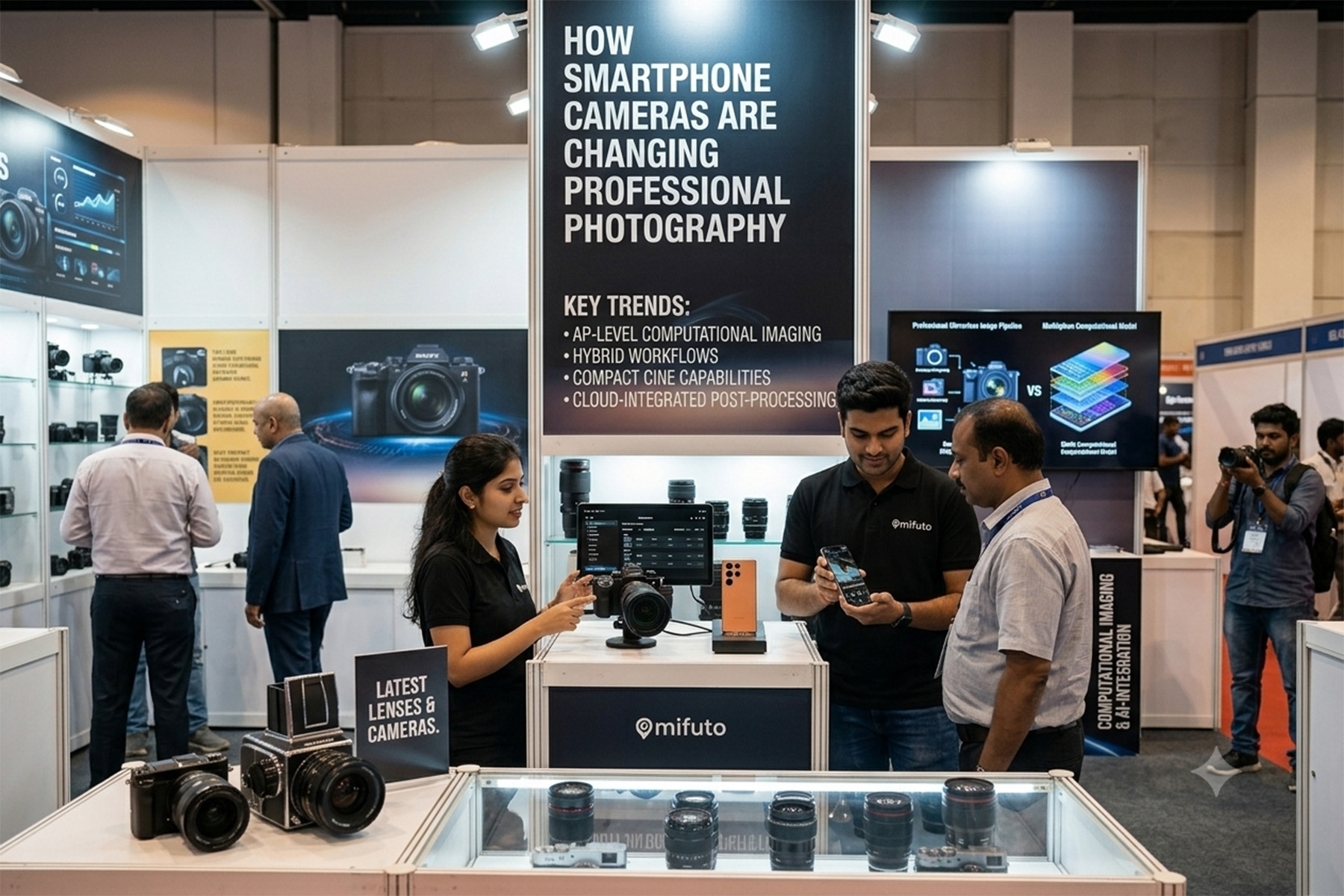
Smartphone cameras are becoming increasingly capable, thanks to larger sensors, multiple lenses, computational photography and AI-powered image processing. Modern flagship phones can now produce impressive photos and professional-looking video in situations that once required dedicated camera equipment.
Computational Photography Is the Game Changer
The biggest difference is not just the camera hardware. Smartphones capture and process multiple frames to improve exposure, colour, detail and low-light performance.
This means the phone is doing much more than simply recording what the sensor sees.
For example, in a difficult evening scene, computational photography can combine information from multiple frames to produce a brighter and cleaner image.
Smartphones Are Becoming Serious Video Tools
Smartphones are also moving closer to professional video workflows.
For example, Apple's Pro models support ProRes, a professional video format designed for high-quality editing and post-production. Supported iPhones can even record ProRes directly to external storage.
This makes smartphones useful for:
-
Social media content
-
Reels and short videos
-
Behind-the-scenes footage
-
Interviews
-
Travel films
-
Second-camera angles
-
Quick client content
AI Is Changing the Editing Process
AI can now help photographers and creators with tasks such as subject detection, image enhancement, noise reduction, portrait processing and other editing workflows.
This allows creators to spend less time on repetitive technical work and more time on creativity.
Can a Smartphone Replace a Professional Camera?
Not completely.
Dedicated cameras still have major advantages, particularly larger sensors, interchangeable lenses, greater control over depth of field, long-lens performance and demanding professional workflows.
Recent comparisons between high-end smartphones and medium-format cameras show just how close smartphones can look in favourable conditions—but dedicated cameras still maintain important advantages in dynamic range, colour accuracy, lens performance and challenging lighting.
The Real Change
The smartphone isn't necessarily replacing the professional camera.
It is expanding what a photographer can do.
A professional photographer might use a mirrorless camera for the main shoot, a smartphone for behind-the-scenes content, and another phone for quick social-media delivery.
The best photographers of the future may not ask:
“Camera or smartphone?”
They may ask:
“Which tool is best for this moment?”
The Future Is Hybrid
Smartphones have made photography more accessible, faster and more flexible.
But technology is only a tool.
A great camera can capture an image. A great photographer knows when, where and why to capture it.